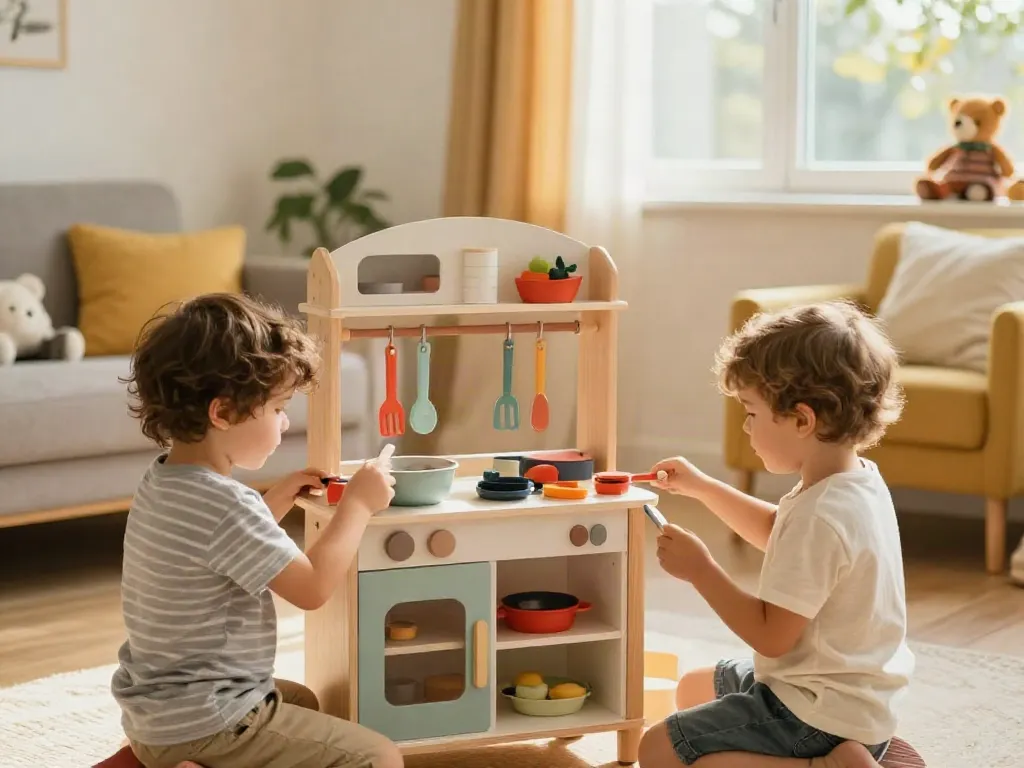
Understanding the Appeal of Toy Kitchens
The charm of a toy kitchen lies in its ability to ignite the imagination of young minds. These engaging playsets have become staples in playrooms and nurseries, providing endless opportunities for children to dive into role-playing scenarios that mimic real-life cooking and kitchen activities. Beyond mere entertainment, these toys play a pivotal role in shaping cognitive and social development, making them an essential addition to any child's toy collection.
Why Kids Love Toy Kitchens?
Children are naturally curious and love to imitate the adults around them. Toy kitchens fulfil this desire for exploration and imitation by allowing kids to engage in pretend cooking, serving, and entertaining scenarios. They often come equipped with realistic features such as stovetops, sinks, and utensils, which enhance the role-playing experience. Additionally, the vibrancy of colours and the variety of accessories available appeal to young children's senses, making playtime both enjoyable and stimulating.
Benefits of Pretend Play for Child Development
Pretend play, particularly in settings like a toy kitchen, comes with numerous developmental benefits:
- Creativity and Imagination: Children create scenarios and stories, fostering creativity.
- Social Skills: Engaging with peers or siblings during play can enhance communication and cooperation.
- Cognitive Development: Children learn problem-solving skills as they navigate role-play situations.
- Emotional Growth: Role-playing different characters helps children understand their emotions and those of others.
Features to Look for in a Quality Toy Kitchen
Not all toy kitchens are made equal. When selecting a kitchen set, consider these key features to ensure an enriching play experience:
- Durability: High-quality materials ensure the kitchen can withstand vigorous play.
- Safety Features: Look for rounded edges and non-toxic finishes to keep little ones safe.
- Size and Scale: Ensure the kitchen suits your child’s height and space available.
- Accessories: A variety of add-ons can enhance creativity and diversity in play.
Choosing the Right Toy Kitchen for Your Child
Consider Age Appropriateness
When selecting a toy kitchen, age appropriateness is crucial. Younger children may benefit from simpler designs with fewer components, while older children may enjoy more intricate setups that encourage complex play scenarios. Always check manufacturer recommendations to ensure safety and suitability.
Material Types: Wood vs. Plastic
Choosing between wooden and plastic toy kitchens often comes down to personal preference and budget:
- Wooden Kitchens: Typically more durable and aesthetically pleasing, wooden kitchens can withstand years of play. They often feature rustic designs that appeal to parents.
- Plastic Kitchens: Lightweight and usually more affordable, plastic options can be easier to clean and move, though they may not last as long.
Design and Functionality Considerations
A well-designed toy kitchen should encourage interactive play. Look for features such as:
- Interactive Elements: Components like working knobs, lights, and sounds can enhance the realism of play.
- Modular Designs: Some kitchens offer the ability to customise configurations, making it easy to adapt the play space.
- Storage Solutions: Built-in storage can help keep play areas tidy and organised.
Setting Up a Toy Kitchen at Home
Creating a Safe and Inviting Play Area
To facilitate imaginative play, it's essential to create a safe and welcoming environment. Ensure the area is free of hazards and has ample space for movement. Bright, inviting colours and themed decor can enhance the atmosphere, making the kitchen feel like a true culinary hub.
Incorporating Educational Elements into Play
Enhance the educational value of your child’s playtime by integrating learning opportunities into their cooking adventures. For instance, use recipes that involve counting ingredients or measuring, helping children with their numeracy skills while they play. Role-playing can also introduce them to basic food preparation and nutrition, encouraging healthy eating habits.
Maximising Space for Imaginative Play
In smaller homes or play areas, consider using multipurpose furniture that can store toys when not in use. Wall-mounted shelves can house ingredients and accessories, keeping everything within easy reach while saving floor space. Additionally, corner kitchens can be a great option in compact areas.
Engaging Activities with Toy Kitchens
Fun Cooking Scenarios to Encourage Role Play
Encouraging children to devise fun cooking narratives can enhance their engagement. Set up scenarios where they host a dinner party or run a restaurant, prompting them to think of menus, arrange seating, and 'serve' their guests.
Hosting Playdates with Culinary Themes
Transform playdates into memorable culinary experiences by hosting cooking-themed events. Provide recipes and ingredients for simple dishes, allowing children to collaborate and create together. This not only fosters teamwork but also provides a delightful way to introduce social skills.
Educational Recipes for Little Chefs
Introduce simple recipes that are age-appropriate and encourage participation. Ideas could include:
- Fruit Salad: Let children practice cutting (with supervision) and combining various fruits.
- Pasta Dish: Involve them in boiling water and mixing ingredients for a simple pasta dish.
- Smoothies: A fun way to experiment with different flavours and textures.
Future Trends in Toy Kitchens for 2026 and Beyond
Innovative Features and Technology Integration
As technology continues to evolve, toy kitchens will likely incorporate innovative features that enhance play experiences. Look for kitchens with integrated apps or augmented reality that can provide interactive cooking lessons or culinary challenges.
Eco-Friendly Materials and Sustainability
The growing emphasis on sustainability will see toy kitchens made from eco-friendly materials, reducing environmental impact. Brands will likely focus on sustainable sourcing and producing kitchens that not only benefit children but also the planet.
Expert Predictions: The Evolution of Play Kitchens
Experts predict that play kitchens will continue to evolve, offering more inclusive and diverse options. Future designs may reflect various cultural cuisines, allowing children to explore global culinary traditions, promoting a deeper understanding and appreciation of different cultures.
What are the best toy kitchen brands?
Some of the most reputable brands in the market include Melissa & Doug, KidKraft, and Little Tikes, each known for their quality and design.
How can toy kitchens aid in children’s learning?
Toy kitchens enhance learning by encouraging creativity, improving social skills through cooperative play, and teaching basic mathematics through measuring and counting during cooking activities.
What safety features should I consider in a toy kitchen?
Prioritise kitchens with rounded edges, non-toxic materials, and secure hinges to prevent any pinching accidents.
Can I customise my child’s toy kitchen?
Many models allow for customisation with stickers, chalkboards, or removable components, letting children personalise their cooking space.
What age is appropriate for a toy kitchen?
Typically, toy kitchens are suitable for children aged 3 years and older, but always consider specific age recommendations provided by manufacturers.